
Scaffolding is essential in construction and maintenance work, providing stable work platforms and safe access to elevated areas while also serving as temporary structural support. There are many types of scaffolding, and this article provides the complete types and features of scaffolding to help you select the right scaffolding for your construction.
Types of Scaffolding
Tube and Clamp Scaffolding
Tube and clamp scaffold, called tube and coupler scaffolding, pipe scaffolding, tubular scaffold, pipe and fitting scaffold, tube and fitting scaffold, etc., is a scaffold formed by scaffold tubes and scaffold fittings. It is the first type of metal scaffold system in the scaffolding industry, instead of the ancient timber and bamboo scaffold. Thus, tube clamp scaffold is called traditional scaffolding.
Tube and clamp scaffolds are still popular worldwide for their flexibility, stability, durability, high load, standard sizes, etc. Before modular scaffolding was born, tube clamp scaffold had a significant function in construction.
The tubular scaffold is still popularly used independently for construction or mixed with modern modular scaffolding systems. Tubular scaffolding has excellent compatibility because of the standard outer diameter of 48.3mm, the same diameter as modular scaffold parts of standards, ledgers, etc., and can be assembled at any place on the scaffold, helping modular scaffold increase the safety and convenience in bearing, shaping and reaching etc.


Scaffold tubes of the tube coupler system are generally 6m long (some are 21′ or 6.4m). They can be cut into different lengths for construction needs.
In the tubular scaffold system, scaffold tubes function as fundamental elements of verticals, horizontals, braces, and transoms during framing and forming construction support. At the same time, scaffolding clamps and fittings function as connectors and fixings between them.
Standards of Tube Clamp Scaffolding
Major Scaffold Tube Standards
- BS1139: British standard for scaffolding. (Recommended: Download BS1139 standard for scaffold tubes)
- EN39: British/European Standard for Scaffolding. (Recommended: Download EN39 Standard)
- EN10219: European Standard for Steel Tubes ( Recommended: Download EN10219 standard)
- ASTM: American standard for scaffold tubes ( Recommended: Download ASTM A36 and ASTM A500 )
- AS1576: Australian standard for scaffold tubes ( Recommended: Download AS1576 Standard)
- JIS 3444: Japanese standard for scaffold tubes ( Recommended: Download JIS 3444 Standard)
Recommended Read: What is the difference between BS1139 and EN39
Major Scaffolding Clamp Standards
- EN74: British/European Standard for Scaffold Couplers (Recommended: Download EN74 standard)
- BS1139: British Standard for scaffold couplers (Recommended: Download BS1139 standard for coupler)
- ASMT: American standards for scaffold
- AS1576: Australian standard for scaffold
- JIS A 8951: Japanese standard for scaffolding clamps
- KSD3501: Korean standard for scaffolding clamps
Popular Steel Grades of Tube Clamp systems
- S235
- S355
- S275
- STK500
- STK400
- ASTM A36
- ASTM A500
Recommended: What types of steel scaffolding grades and details
Popular Aluminium Grades of Tube Clamp systems
- 6061 T6
- 6063 T6
- 6082 T6
Types of scaffold tubes
Types of scaffold fittings
- 90-degree Coupler (Double Coupler)
- Swivel Coupler
- Sleeve Coupler(Joint Box)
- Fixed Beam Girder Coupler
- Swivel Beam Clamps
- Putlog Coupler(Single Coupler)
- Board Retaining Coupler(BRC)
- Limpet Clamps(Board Clamp)
- Inner Joint Pins
- Ladder Clamps (Forged, Pressed Type)
- Toe Board Clamp


Modular Scaffold(Scaffold System)
Modular system scaffolds are scaffold sets formed by prefabricated scaffold parts with typically fixed sizes, interlocking mechanisms, etc., generally not their essential parts in construction.
Modular scaffolds are mostly made of steel or aluminium metals. Essential components of the modular scaffolding are verticals, ledgers, braces, adjustable screw jack bases, transoms etc.
Different accessories on the parts (like parts of standards, ledgers and braces) of the modular system scaffold are the main features that separate different modular systems. For example:
- Ringlock system standards with rings
- Cuplock system standards with top cup and bottom cups
- Kwikstage system standards are with stars (four V clips forming the star)
- Crab system standards are with stirrups

Ringlock Modular Scaffold System 
Modular System Scaffold Materials 
Crab 60 Shoring System Verticals 
Galvanized Cuplock Scaffold
Features of Modular Scaffold:
- Modular Components
- Interlocking Design
- Quick Assembly and Disassembly
- Enhanced Safety
- Built-in Safety Features
- Variety of Planks and Platforms
- Durability
- Integrated Ladder Systems
- Seamlessly Interlocked Accessories
Major Types of Modular Scaffold Systems
Ringlock Scaffolding
Ringlock scaffolding is one of the modular scaffold systems, typically having rings on verticals and cast-steel ledgers head on horizontals.
Recommended Read: Ringlock Scaffolding System and What Ringlock Scaffolding is.


Types of Ringlock Systems
According to different types of ring system accessories and scaffold standards and safety regulations, There are three types of ringlock systems:
- European Pin Type: Allround System (Conform to EN12810 standard)
- USA and Canada Type: Pin Lock System (Conform to CSA and ASTM standard)
- Latin America Type: Multidirectional System (Conform to EN 12810 standard but with unique ring system accessories of the rosette, ledger heads and brace head)
Ringlock Load Capacity and Types
According to the load capacity of the ringlock scaffolding. There are regular types and high-load types. A regular type of ring lock system is made of OD48.3mm scaffold tubes. The high-load ring lock system is made of an OD60.3mm scaffold tube.
- OD48.3mm Regular Ringlock Scaffold
- OD60mm Heavy Duty Ring Shore System Scaffold (Recommended Read: Hi Load Ring System System)
Features:
- The Most Popular Type of Modular System Scaffold
- High Load Capacity
- Compliance with Standards and Safety Regulations
- Fast In Erection and Dismantle
- Durable
- Versatile
Kwikstage Scaffolding
Kwikstage scaffolding is a modular scaffold system typically with Stars (formed by a set of four V clips) on the standards. It is called quickstage scaffold, quick-stage, star scaffolding, kwickstage scaffold, wedge lock scaffolding, star scaffolding, speed shore scaffold, and star shore scaffold.
(Recommended Read: Kwikstage Scaffolding System)
Types of Kwikstage Systems
- Africa Type of Kwikstage System: Quickstage System (SANS10085 Standard)
- Indonesia Type of Kwikstage System: Speedshore Scaffold (AS/NZS 1576 Standard)
- Australian & UK Type of Kwikstage System: Kwikstage System
Features:
- Popular Used In the UK, Australia, Ireland, South Africa, Mozambique, Nigeria, Mauritius, Indonesia etc.
- Compliance with Safety Regulations
- Cost Effective
- Modular Components
- Versatile for Construction


Cuplock Scaffolding
Cuplock scaffolding is a modular scaffold system with typical accessories of top and bottom cups on cuplock verticals and ledger blades on cuplock ledgers. In erection, the vertical top cups lock the ledger blades to the bottom cups, forming sturdy frames and sets to support structure and construction.
Recommended: Cuplock System Parts
Type of Cuplock System
- Painted Cuplock System: Required by Gulf countries and African countries.
- Hot Dip Galvanized Cuplock System: Required by UK, Ireland, USA, etc.
Features:
- An old modular system scaffold that was invented by SGB and has been serviced in the scaffolding industry for a long time.
- Wide Used Scaffolding System
- Compliance with Scaffold standards and safety regulations
- Versatile System For Both Construction and Formwork. (Recommended: Cuplock Formwork)
Recommended: Catalogue Download of Cuplock


Quick Lock Scaffolding
Quick lock scaffolding is a steel modular scaffold system with disc plates on verticals(legs) and cast iron ledger ends on horizontal parts. The discs on the verticals have four holes to receive quick lock horizontals from 4 directions.
The quick lock scaffold system has fewer components and mainly supports formwork beams and decks in concrete shoring. The legs and horizontal parts of the quick lock system are made of OD48.3mm steel scaffold tubes.


Featured:
- Mainly for Formwork Shoring.
- Used in Some the African countries
- Cost Effective
- OD 48.3mm for Both Legs and Horizontals
Tubelock (Twist Lock) Scaffolding
A Tubelock scaffold is a tube with a female fitting at one end and a male fitting at the other. In construction, the male and female ends lock together by twisting them. There is no need to invest in sleeve couplers and inner joint pins in the scaffold tube connection. A tube lock scaffold is called a twist-lock scaffold or a steel tube with a fitting. They are self-locked, thus saving 50% of the erection and dismantling time in scaffolding construction compared to the traditional tubular scaffold. Tubelock scaffolding is made of 48.3mm diameter and 3.2mm thickness.


Features:
- Durable
- Easy Fixing with End Fittings
- Used a lot in the USA and Canadian countries
- OD48.3mm standard diameterer
- All lengths available
Crab 60 Shoring Scaffolding
Crab 60 shoring scaffold is a modular steel scaffold made of OD60mm scaffold tube in S355 steel grade with sets of stirrups on vertical parts and forged wedge keys and C clamps on horizontal parts.
(Recommended Read: Steel grades for scaffolding)
In the system, there is a special component called a triangle frame. This part helps the Crab 60 system scaffold quickly move from place to place without the need to scaffold dismantle in heavy-duty shoring. Thus, it saves a lot of labour costs and makes the concrete and shoring highly efficient.


Features:
- Hight Load System for Heavy Duty Support and Shoring
- Durable System Scaffold
- Efficient Scaffold System Save Construction Time (No need to dismantle in place to place moving)
- Popular Used in Malaysia Singapore, France, etc.
Crab 25 Scaffolding
Similar system scaffolds likethe Crab 60 system with accessories of stirrups on verticals and forged clamps and keys on horizontals. But made of OD48.3mm scaffold tubes. It is also called a multi-function scaffold system.


Features:
- Scaffold System Galvanized Popular Used In France, Malaysia, Brazil etc
- Lightweight Compared to Crab 60 Shore System
- Automatic Locking Mechanism
- Cheaper Cost Than Crab 60 Scaffold
Quick Erect Scaffolding (QES)
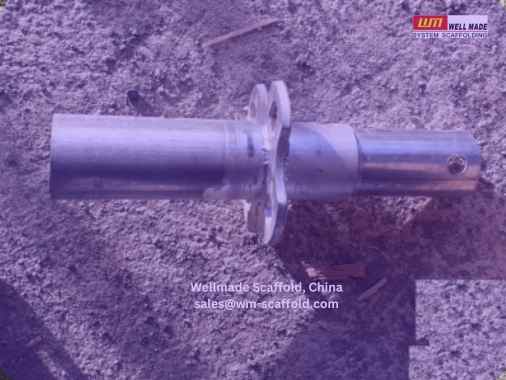
Quick erect scaffolding is a steel modular scaffold similar to ringlock scaffold but with forged round rings and forged wedges. In contrast, the wedges are integrated inside the scaffold tube, which does not need extra cast ledger heads welded on. It is called a QES scaffold.

Octagonlock Scaffolding
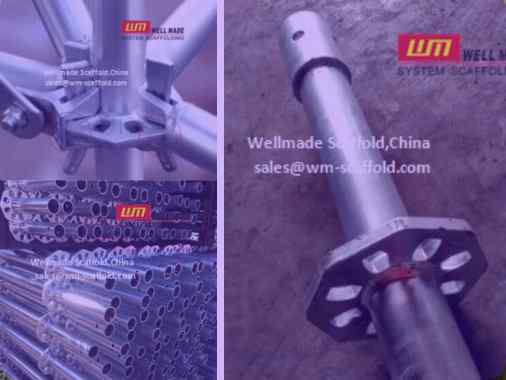
Octagonlock scaffolding is a steel modular scaffold with forged or casted octagon rings(not round rings) on verticals while cast ledger head on horizontals with forged wedge key locked to the octagon rings in construction, forming strong scaffold structures and frames.

Frame Scaffolding
Frame scaffolding is a metal scaffold modular system with components of prefabricated “frame“-shaped verticals, which have double legs and scaffold lock pins welded on. In the frame system scaffold construction, the vertical frames are always used in pairs, connected, and fixed by scaffold single or x braces and horizontals to form support or a working area. Frame scaffolding is also called bracing scaffolding or lock pin scaffolding.
Frame scaffolding is easy to use with prefabricated paralleled vertical tubes. It needs less erection time and works then the popular modular scaffold systems like ringlock, kwikstage and cuplock systems.
According to the shape of vertical frames, there are many types of frame scaffolding systems: walk-through frame, ladder frame, h frame, narrow frame, European facade frame scaffold, and shoring frame.


Walk through Frame Scaffold
A walk-through frame scaffold is a frame system scaffold with vertical “frames” featuring an opening or walk-through portal that allows easy passage for workers and persons within the scaffold structure. Thus, walk-through frame scaffolding is often used in sidewalk or shed scaffolding in cities.
The walk-through frame scaffold is in an ‘A’ shape. It is also called a walkthru frame, main frame scaffolding, or A-frame scaffold. Walk-through frames have widths of 3′, 4′, 5′, and 42“, which enables workers to carry materials and perform tasks without obstruction along entire lengths of the structure.


Ladder Frame Scaffold
Ladder frames are 4′ or 5′ wide with two or three ladder rungs on half of the width. The width of the ladder rungs is enough to put one width of the scaffold platform on. The adjustable working platform height is convenient for material shelving and different working height requests for brick masonry, stucco, carpentry work etc.,
Thus, ladder frame scaffolding is also called masonry scaffolding or mason frame scaffold.


H Frame Scaffold
H frame scaffolding is any scaffolding vertical frames with two vertical tubes that are connected by one or two horizontal tubes forming a shape of “H”. Thus, H frames can be used for walk-through frames, ladder frames, shoring frames, euro frames, and narrow frames. Two pieces of H frames fixed by cross X braces form scaffold structures in building construction.


Narrow Frame Scaffolding
Narrow frame scaffolding is the scaffold frames with a “narrow” width, less than 3′, from one vertical to another vertical. There are 4-5 rungs between the narrow frame’s two vertical tubes. Narrow frame scaffolding is designed to be easily moved and often formed with caster wheels as a mobile scaffold, used in painting, drywall, and plasters the jobs that workers must frequently change position.


Shoring Frame Scaffolding
A shoring frame is a scaffolding frame designed to withstand high loads in construction for heavy-duty concrete and shoring. Shoring frames are made of OD57mm or OD60mm scaffold tubes in S355 higher steel grade.


Euro Frame Scaffolding
Euro frame scaffolding is a type of frame scaffold required for facade construction in European countries. It is made of OD48.3mm vertical tubes that can take heavier weight than regular scaffold frames of OD42mm. Euro frame scaffolding includes Layher Speedyscaf frame scaffold, Plettac frames, Marco Euro(Chile), etc.


Scaffold Props
Scaffolding props are temporary supports used in construction to prop up slabs, beams, walls, and columns until the concrete has cured to a strength that can support itself. These props play a crucial role in formwork systems or shuttering work, carrying the weight of concrete and reinforcing architectural components until the structure can bear the load.
Designed for height adjustment, scaffolding props consist of inner and outer tubes, threaded prop sleeves, prop nuts, top and bottom plates, and lock pins, allowing them to adapt to the required height. They can support various construction applications.
Scaffolding props, also known as formwork props, shuttering props, shuttering jacks, structural props, acrow props, acro jacks, adjustable steel props, jack posts, shore props, shoring jacks, shoring props, telescopic props, shore posts, cover-a-height range from 0.6 meters to 6 meters. They are typically made from steel or aluminium.


Based on their designed load capacity, scaffolding props are divided into various load classes: heavy-duty, medium-duty, and light-duty.
Heavy-duty props are classified into D class and E class. The D class props come in sizes D25, D30, D35, D40, D45, D50, and D55 and have a designed load capacity of 34 kN (according to the EN1065 standard). The E-class props include sizes E25, E30, E35, E40, E45, E50, and E55 and have a designed load capacity of 51 kN (according to the EN1065 standard). Heavy-duty scaffold props typically feature an outer diameter of 76 mm for the outer tube and 60 mm for the inner tube, both made of steel.
Medium-duty scaffold props are classified as B and C classes, covering sizes from C25 to C55. Light-duty scaffold props fall under A class, covering sizes from A25 to A40.
Mobile Scaffold (Rolling Scaffold Towers)
Mobile scaffolds are supported scaffolds equipped with wheels or casters, making them movable for light work such as painting, plastering, drywall installation, and minor repairs. They are suitable for indoor and outdoor use, especially in jobs requiring frequent repositioning. Mobile scaffolds provide convenient access to elevated areas and can be easily moved around construction sites without dismantling the entire frame. These scaffolds are also known as rolling scaffolds and include various types such as single or narrow-frame mobile scaffolds (like baker scaffolds or perry scaffolds), double-width mobile scaffolds, folding scaffolds, and adjustable mobile scaffolds.


Folding Scaffolding(Portable Scafold)
Folding scaffolding is designed for easy folding and unfolding, making it convenient for transportation and storage. It features hinges or folding mechanisms that allow the scaffold to collapse into a compact size. Typically, folding scaffolding includes casters and a single platform, enabling it to be easily moved to different positions for elevated jobs inside and outside the home. It is often called a portable scaffold constructed from aluminium or steel. This type of scaffolding is commonly used for home improvement and DIY projects.
Metal Scaffolding, Fiberglass Scaffolding and Wood Types of Scaffolding
According to the difference in the material of scaffolding, there are metal, fibreglass, and wood scaffoldings.
Metal Scaffolding
Metal scaffolding is the most common type of scaffolding. It consists of various components, including verticals, horizontals, braces, base jacks or frames, and cross braces, all made from steel or aluminum. This type of scaffolding enables workers to safely and conveniently access elevated and hard-to-reach locations while providing strong support for formwork concrete during various construction projects. Metal scaffolding includes both steel scaffolding and aluminium scaffolding.
Steel Scaffolding
Steel scaffolding is constructed from steel and consists of verticals, horizontals, braces, base jacks, and metal decks and frames. It is designed to provide access and platforms for workers working at heights and shoring support for structures and concrete. Due to its high strength, safety, durability, and cost-effectiveness, steel scaffolding is the best scaffolding today, and it can be used for a wide range of construction and shoring applications.
There are two main types of steel scaffolding: modular scaffolding systems, which use prefabricated modular parts, and traditional tubular scaffolding, made from steel scaffold tubes and clamps. Both types are commonly used in construction and shoring projects.


Steel scaffolding needs to have a surface treatment and be finished by galvanizing, painting, or coating. From this perspective, the scaffolding type can be galvanized, painted, or coated.
- Galvanized scaffolding: Hot dip galvanized or E-galvanized protected scaffolding material
- Painted scaffolding: scaffolding material painted for anti-corrosion purposes
- Powder-coated scaffolding: scaffold material coated by colour powder
- Black scaffold: scaffolding self-finished without any protection


Aluminium Scaffolding
Aluminium scaffolding is a lightweight scaffold system commonly used as scaffold towers or mobile scaffolding with components made of aluminium or alloy metals. It offers workers safe and convenient access and work platforms on various construction and maintenance projects. Aluminium scaffolds are corrosion-resistant and durable. They are easy to move and can be assembled with minimal effort, which increases efficiency and reduces labour costs on the job site. This type of scaffolding is suitable for small- or light-to-medium-duty construction, as it has a lower weight-bearing capacity than steel scaffolding.


Fiberglass Scaffolding (GRP Scaffold)
Fibreglass scaffolding is made from glass-reinforced plastic (GRP), which is nonconductive, fireproof, and chemically resistant. This type of scaffolding is known for being lightweight, strong, and flexible. It is suitable for use in power substations and petrochemical environments where metal and wood scaffolding is prohibited.
Wood Scaffolding
Wood scaffolding is an ancient form of scaffolding that was commonly used before the introduction of steel scaffolding. It is constructed from timber, wood, or logs. While wood scaffolding was widely popular in the past, it has become less common today. However, some scaffolding components, such as wooden planks and pole ladders, are still in use. The best wood for wood scaffolding is Douglas fir, larch, hemlock, spruce, pine, or coast-Sitka spruce species. The cheapest wood is New Zealand Pine.


Conclusion
Different types of scaffolding have different features. You can choose the right type according to your project requirements, including height, load capacity, and work conditions. Selecting the right scaffolding system enhances safety, efficiency, and project success.